
In the hive: nectar into honey
Nectar is a sugary liquid that flowers make to attract insects. It's mostly water, often more than half. A forager sucks it up with her tongue and carries it home in her honey stomach, a crop separate from the stomach she digests with. A full load might weigh 30 to 40 milligrams, close to her own body weight.
At the hive she passes the nectar to younger house bees. They add enzymes, which split the sugars into simpler ones and help keep the honey from spoiling. Then they spread it thinly in the cells and fan it with their wings, warm air flowing through the hive, until most of the water has gone. When it's thick enough, below about 20% water, they seal each cell with a lid of fresh white wax. That capped honey will keep for years.
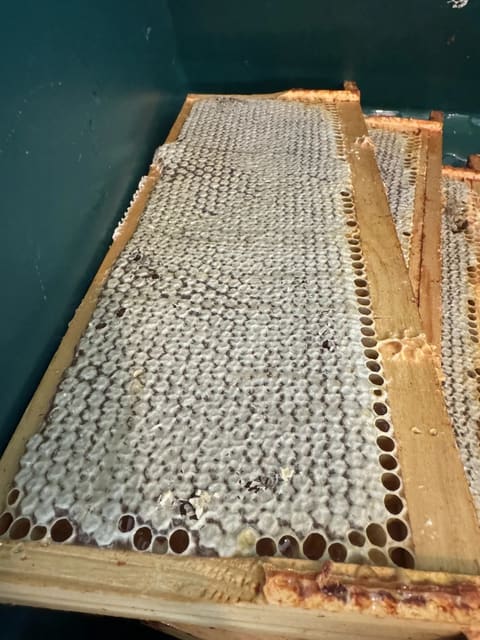
It takes a lot of work. One worker makes only a tiny amount of honey in her whole life, and a jar of honey is the result of a huge number of foraging trips.
Our extraction day
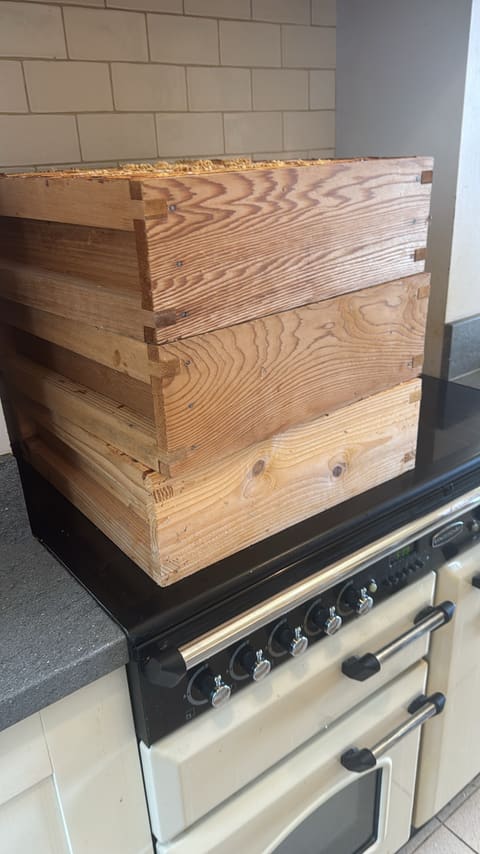
1. Taking off the honey. We put a clearing board under the supers a day or two before. It's a one-way exit, so the bees go down into the hive and can't come back up. Then we lift off boxes of capped honey, leaving the bees plenty for themselves.
2. Uncapping. Indoors, we slice the thin wax cappings off each frame to open the cells.
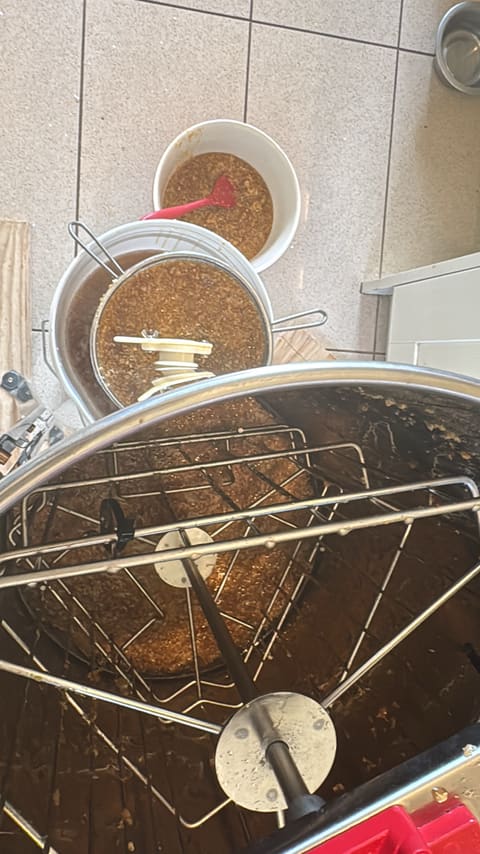
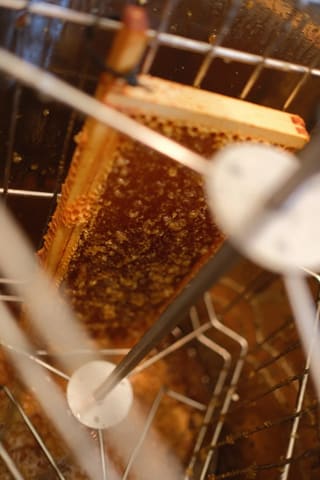
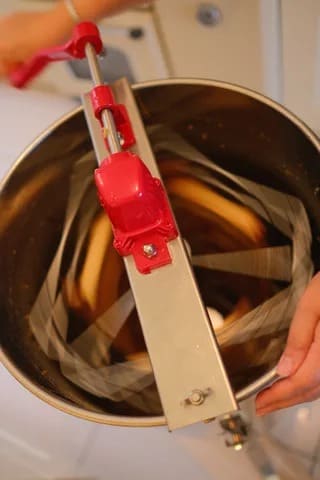
3. Spinning. The frames go into the extractor, a steel drum with a cage that spins. The honey flies out of the cells, hits the wall and runs to the bottom. The comb stays whole, so the frames can go back on the hive for the bees to fill again.
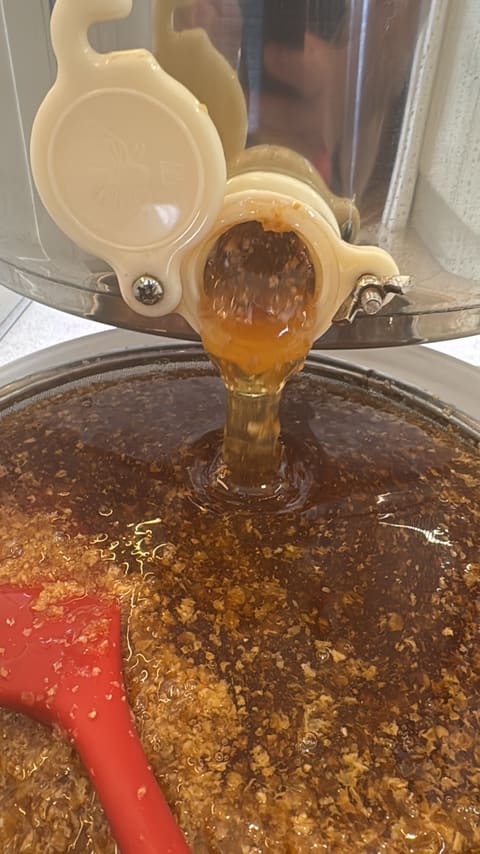
4. Straining and settling. The honey pours out of the tap at the bottom (the honey gate) through a strainer that catches bits of wax. Then it sits in a bucket for a day or two so tiny air bubbles and wax float to the top.
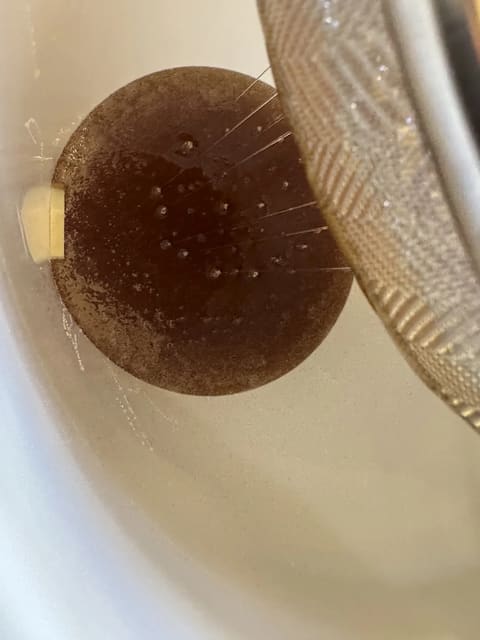
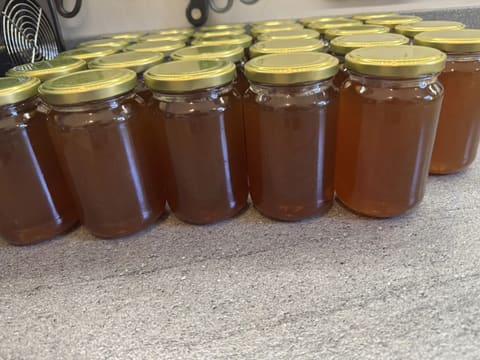
5. Jarring. Finally it goes into jars, gets a lid and a label, and it's ready. Nothing added and nothing taken away.
Why every year tastes different
The honey's colour and flavour come from the flowers the bees worked that year. Around Newton Abbot a spring honey leans on cotoneaster, fruit blossom and garden flowers, while a summer honey leans on bramble, clover and lime. The forage calendar shows what's in flower when.