
Hive Mind
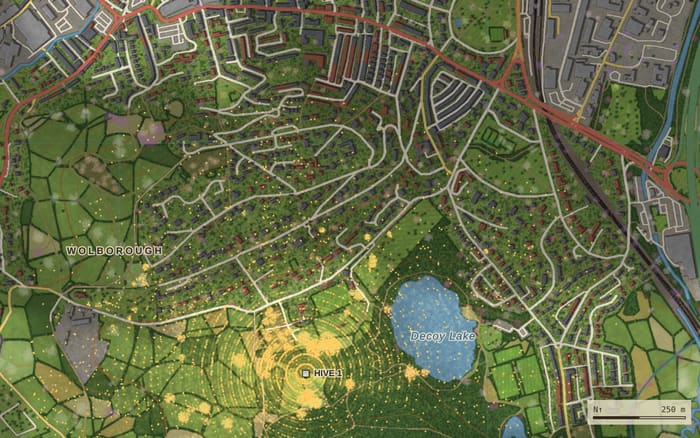
Watch a colony forage Newton Abbot for a year. The streets, gardens, woods and hills are real. The bees follow the rules real bees do.
How to play
- Scroll to zoom, drag to pan. Zoomed out, a day passes in seconds. Zoom right in and time slows to bee speed, so you can watch single foragers fly.
- Click a patch of flowers to see what it is, how much nectar is left, how many bees are working it, and the waggle dance that points to it.
- Follow a bee F to ride along on a foraging trip, from the hive entrance to the flowers and back.
- Plant P something near the hive and see how long the scouts take to find it, and whether the colony switches over.
- Go to the hive H to see the dance floor, the brood, and how much honey is stored. Space pauses.
What's real, and what isn't
The map comes from OpenStreetMap and the hills from satellite height data, so every road, garden, wood and field is where it really is. The plants, and when they flower, come from what grows around here. The colony grows and shrinks through the year the way a real one does, and the bees share out the work with the same scouting, dancing and recruiting that real honeybees use.
It's still a model, not a camera. Which crop is in which field is invented, and the flower patches are placed by the type of land, not surveyed. The hive on the map sits in a field near our garden, not in it.
New to bees? The waggle dance and A year in the hive explain what you'll see. To look inside the box itself, open the hive frame by frame.