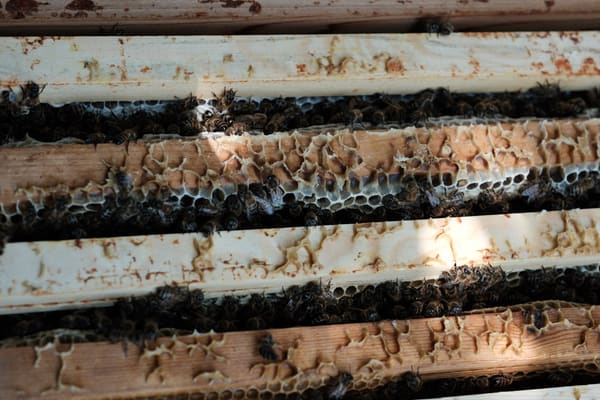
Open the hive
Lift out the frames of a honeybee colony, one at a time, at five points in the year. Find the queen, spot the eggs, and see where the honey goes.
Peak colony
Over 50,000 bees and more than 30,000 cells of brood. The brood nest fills most of the box, with a band of pollen and a crown of honey above. This is swarming season, so beekeepers inspect every week or so. The supers are filling with clover and bramble.
Hover to magnify. Arrow keys change frame, T turns it over, B shakes the bees.Tap a cell to see what's in it. Press and hold to magnify, or zoom in for a closer look.
The colony numbers for each month come from the Hive Mind colony model, run for two years on the Newton Abbot map. How the frames are laid out follows what we see in our own hives. Honey stores and supers follow how we manage them: supers on from April, honey off in August, and 15 to 20 kg left in the brood box for winter.
From our hives
Find the real queen
Five photos from our own inspections, each with one queen in it. Tap her when you spot her. They get harder as you go.
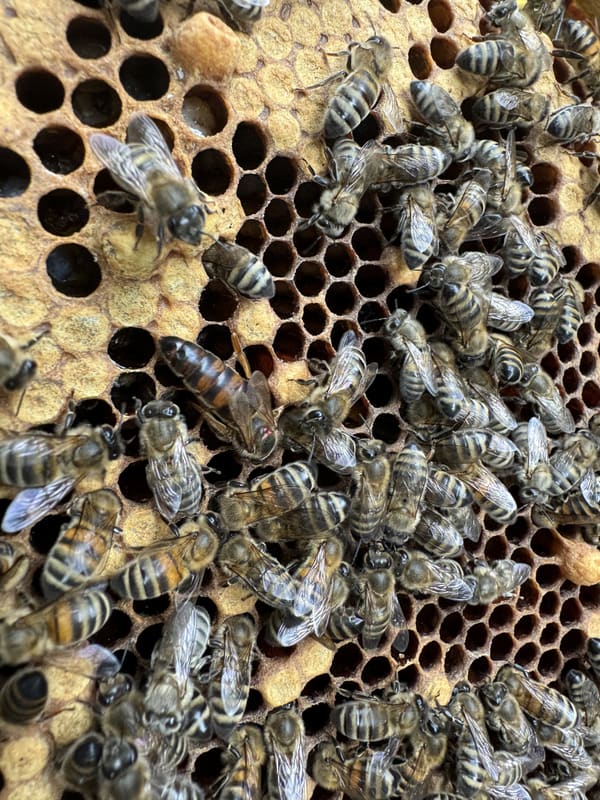
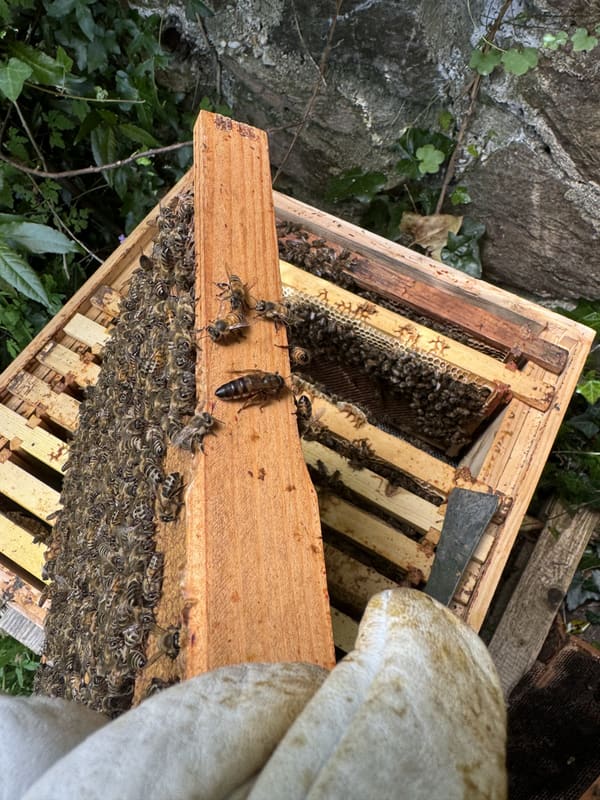
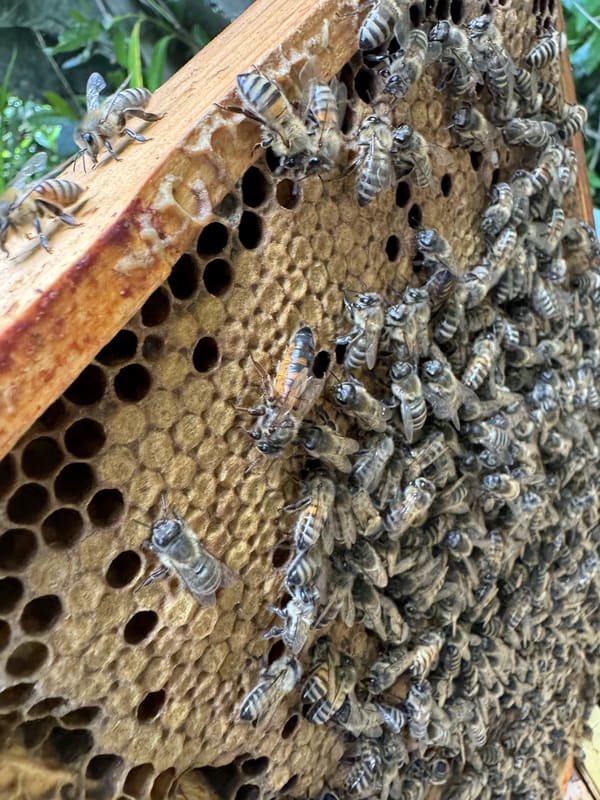
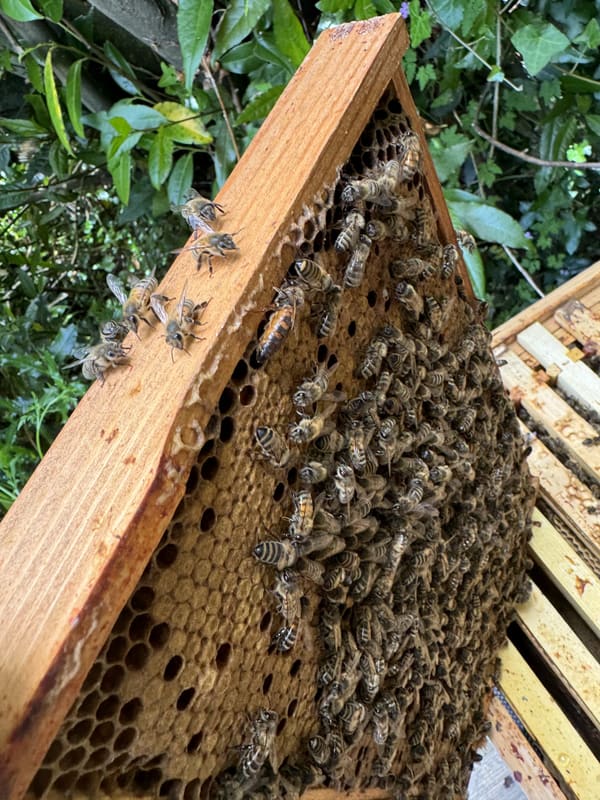
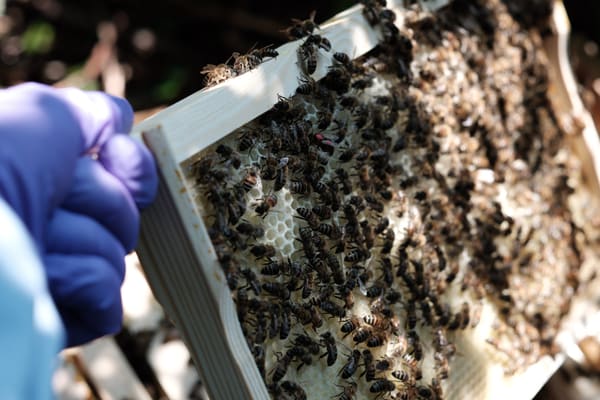
Photo 1 of 5 · Warm-up
A close-up of brood comb. Capped brood on the left, empty cells where bees have just hatched, and a crowd of workers. Where's the queen?
- Photo 1
- Photo 2
- Photo 3
- Photo 4
- Photo 5
From our hives
Compare with a real frame
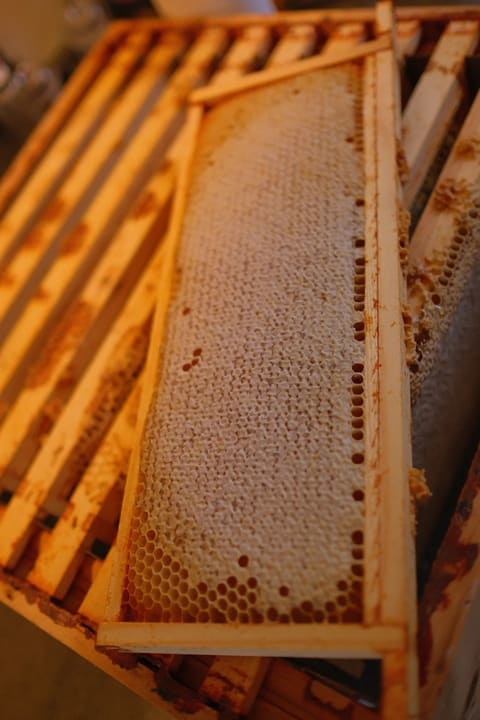
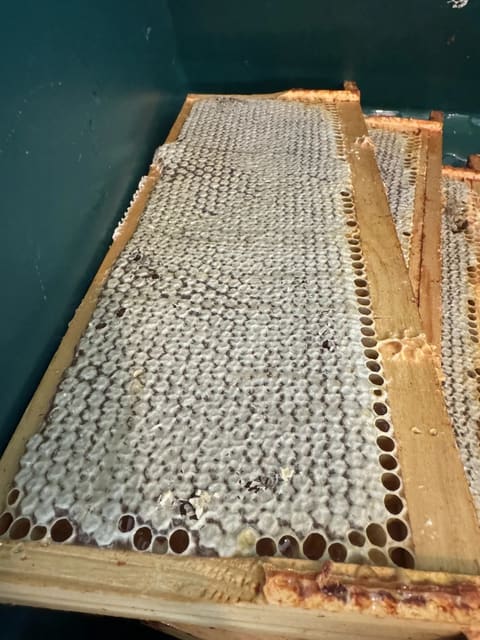
Photos from our own hives near Newton Abbot, taken at the end of summer.
What to look for
- Brood
- Eggs, larvae and capped cells, in the middle of the middle frames. A good queen lays a solid patch with few gaps. The youngest brood is usually round the edge while the nest is growing.
- Pollen
- A band of coloured cells right next to the brood, where the nurse bees need it. Each colour is a different flower. Our spring pollen is a rainbow of oranges, yellows and the brick red of horse chestnut.
- Nectar
- Shiny, open cells. It's still too wet to keep, so the bees fan it until it thickens into honey.
- Capped honey
- Sealed with white wax once it's ripe. It fills the top of the brood frames and the outside frames, and the supers above.
- Drones
- Bigger cells with domed caps, often in the bottom corners of a frame. You'll see them from April to July.
How our hives are set up
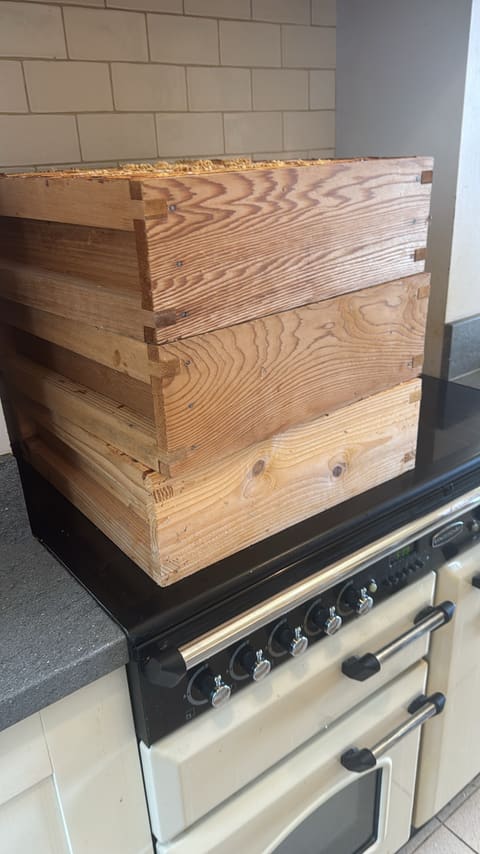
We use National hives. The brood box at the bottom is where the queen lays, and it holds 11 frames. Some of our hives run 10 frames with a dummy board, which gives a bit more room to lift the first frame out. Try both with the switch above.
A queen excluder sits on top of the brood box. The gaps are big enough for workers but too small for the queen, so she can't lay eggs in the supers. That's why the supers only ever hold honey.
When we inspect, we're mainly looking for eggs (so we know there's a queen), enough stores, room to grow, and any signs the colony wants to swarm. Read more in The colony and A year in the hive.