
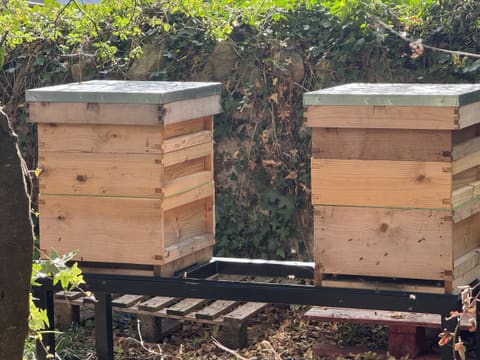
The sun came out properly today and the garden was humming. Summer is over for the bees, but you wouldn't know it from the entrances.
Still busy out front
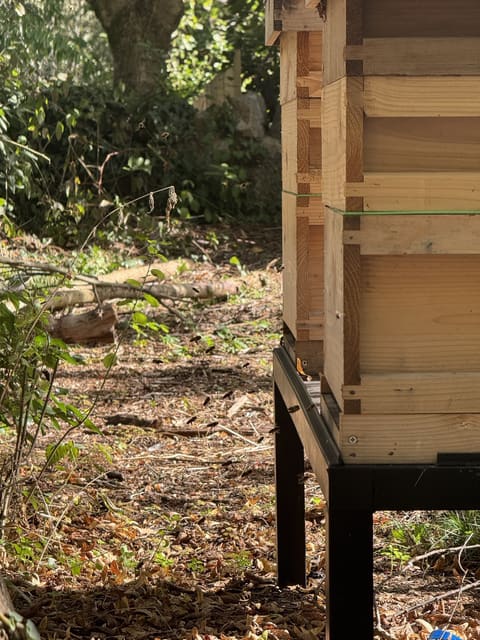
On a warm autumn day the foragers are out as soon as it's bright enough. Most of what they're after now is ivy. It covers the wall behind the hives, and it flowers from September into November, when almost nothing else does. For bees it's the last big source of nectar and pollen before winter. Ivy honey sets hard, sometimes too hard for the bees to use easily (why honey sets), but the pollen is exactly what they need for raising the last young bees of the year.
The forage calendar shows how thin the pickings get from here. By December there's almost nothing left in flower.
What's happening inside
Inside the boxes, the colony is changing gear:
- The queen is slowing down. Fewer eggs means the colony shrinks from its summer peak of around 50,000 bees to a winter cluster of perhaps 10,000 to 15,000.
- Winter bees are being raised. The workers born now are built differently from summer bees. They live for months instead of weeks, and they'll carry the colony through to spring. There's more about them in The colony.
- The drones are being pushed out. Males are no use in winter, so the workers stop feeding them and drag them out of the hive.
- Gaps are being sealed. The bees stop up cracks with propolis, a sticky resin they collect from tree buds, to keep out draughts.
Getting ready for winter
The honey for the jars came off earlier in the season. What's left in the hive is the bees' own food for the winter, and our jobs now are about making sure they get through it:
- Checking stores. We heft each hive (lift one side a little) to feel how heavy it is. A colony needs plenty of honey to last until the spring flowers, and if one feels light, we feed it.
- Treating for varroa. Varroa mites are the biggest threat to honeybees in Britain. We treat once the honey supers are off, so nothing ends up in the jars.
- Mouse guards. When the nights get cold, mice look for a warm, sweet place to spend the winter. A metal strip with bee-sized holes across the entrance keeps them out.
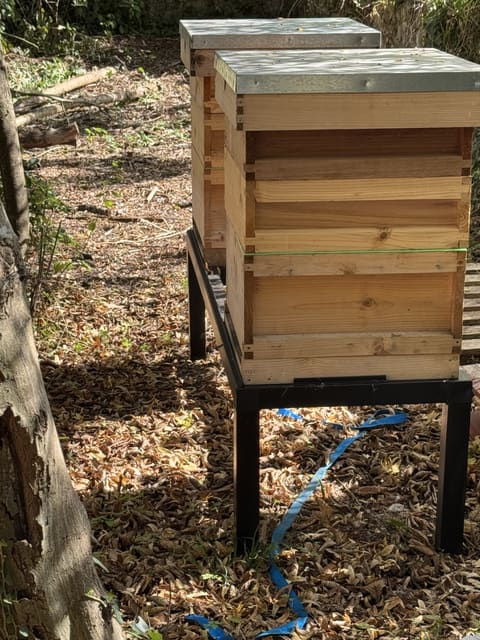
- Straps. Devon winters are windy. A strap round each hive stops a gale lifting the roof off.
- Watching for wasps. Late in the year, wasps try to rob weaker hives. Narrowing the entrance gives the guard bees less to defend.
After that, the best thing a beekeeper can do is mostly leave them alone. The colony clusters on its stores, keeps the queen warm, and waits for the first willow and crocus in February.
If you'd like to see all this happen over a year, Hive Mind runs a colony through the seasons. Leave it running into autumn and you'll see the numbers fall and the foragers switch to ivy.