
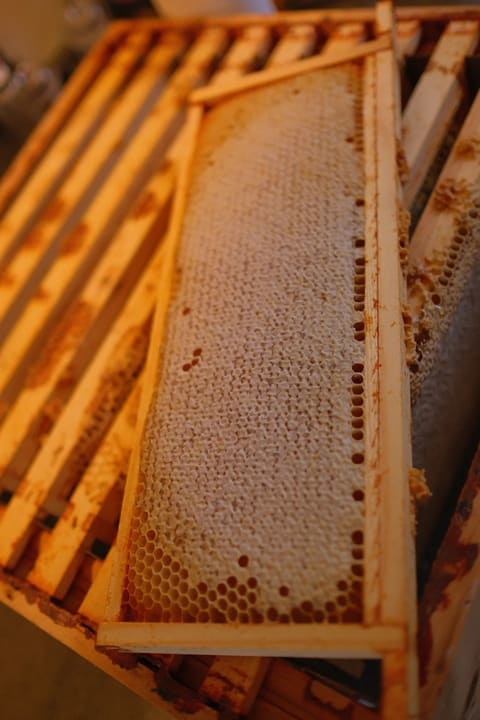
Every beekeeping year is different, and 2026 was a strange one. It didn't go the way we'd planned, but it ended with a kitchen full of honey.
Three swarms
Early in the season, one of our original colonies swarmed. Then it swarmed again, and again. Three swarms from one hive is a lot, and the colony left behind didn't make it.
But the first of those swarms, the prime swarm with the old queen, turned out to be the star of the year. A swarm arrives with full stomachs and nothing but work to do. It builds comb at an astonishing rate, and this one just kept going. By midsummer it had around five supers of honey on top, some of them very heavy to lift.
The other colonies were steadier. Between them they filled about two supers. Almost all of this year's honey came from the prime swarm, which made roughly 50 kg on its own. If you want to know why a swarm can be such a good thing, Swarms explains it.
The weather helped
The summer was changeable, with warm spells, showers and more warm spells, and it seemed to suit the flowers. The nectar kept coming right through the season. You can see what was in flower, and when, on the forage calendar.
Extraction days
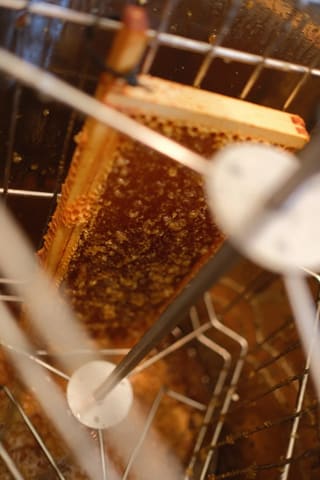
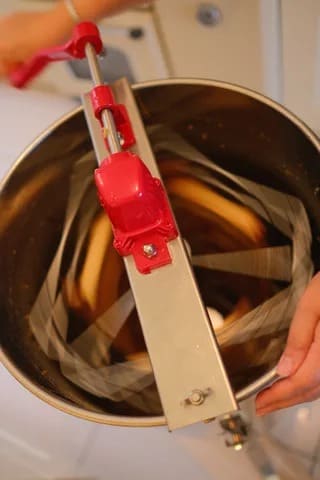
We took the honey off in batches. A clearing board goes on a day or two before, so the bees move down into the hive, and then the full supers come into the kitchen. One extraction alone gave us about 24 kg.
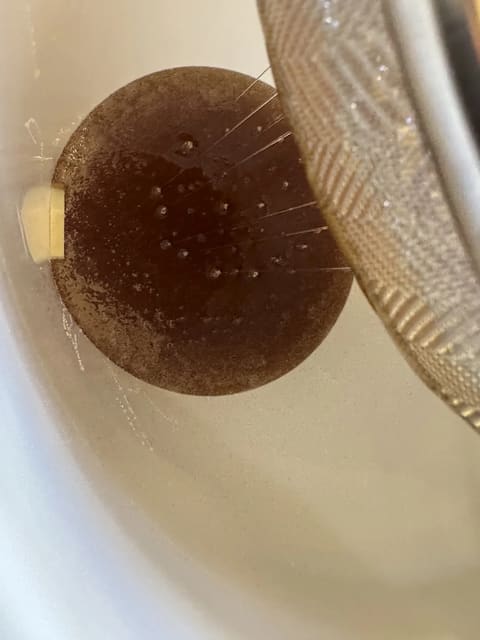
Then it's the same routine each time. Slice off the wax cappings, spin the frames in the extractor, and run the honey through a sieve into a settling bucket. The empty, sticky frames go back on the hives for the bees to lick clean.
Into the jars
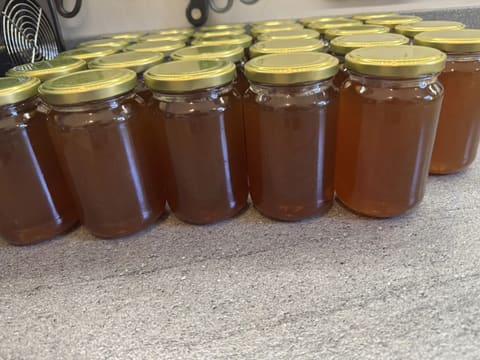
All told, the season came to around 68 kg, which is roughly 150 one-pound jars' worth. It's a summer honey from the gardens, hedges and parks around Newton Abbot. We've called it Devon Moors & Coast.
You can reserve a jar and collect it from us, or pick one up from the cart at Home Farm Café in Parke.
Next year
We're not chasing more hives. The plan is about three strong, healthy colonies going into winter, and a spring with fewer surprises. Though if the bees decide to throw another prime swarm like this one, we won't complain.